• HOME
  • Portfolio
  • Club CreatingYOU.®
  • About
  • Cookbooks
  • Blog
  • Search

Lori Rice

Photography | Styling

  • HOME
  • Portfolio
  • Club CreatingYOU.®
  • About
  • Cookbooks
  • Blog
  • Search

In Defense of Natural Light Food Photography

The Internet is a funny thing. It seems like when we really start to lean one direction for our work, say with natural light food photography, its sensors pick up on that and everything in our path from ads to forum comments stack up against us. 

When it comes to being a natural light photographer, I’ve heard it all. Things like, you’re not a professional photographer if you use only natural light. This one makes me laugh because I can’t remember the last time that I saw a nature photographer haul a big light out on their 10-mile hike or a wedding photography assistant carrying a light around from person to person during a ceremony. Are they not professionals?

I’ve also seen ads on Instagram about how wrong people were to use natural light and how their course using artificial light changed their worlds. I think that’s great - for them. Not for everyone. 

Let’s just get clear on one thing - there are lots of types of photography, lots of light options that can be used in each, and none of your choices make you better, worse, or less professional than anyone else. 

It’s about doing what YOU do. Don’t let people make you feel inferior based on how you choose to work. 

If you are here learning from me I expect two things to be true. 

You enjoy photographing with natural light and/or you know that what I teach here in terms of styling and camera use is applicable whether your light is in a window or plugged into a wall. 

I’m going to share some practical reasons why natural light can be a good choice along with a few things to consider when choosing it.

Then I’m going to share why I’ve chosen to stick with it throughout my career over these past 12 years. 

  • It’s great for small spaces. Gear can fill up a space fast making working in it more frustrating. 

  • It’s budget-friendly. The less extra gear I have to buy, the more I can invest in my camera bodies and experiment with new lenses. 

  • When controlled well, it creates beautiful, natural images. 

  • It requires flexibility. I show you in Confused to Confident how to shoot all day long with natural light. But obviously, you can’t photograph at 10pm. Well, unless you are in special places like Alaska some parts of the year. 

  • You have to change with the seasons. I work longer days in the summer and shorter in the winter. 

  • Natural light works better for me when I’m without a tripod and can move to capture the best angle.

But this is really why I choose to use it 95% of the time. 

Unlike a lot of other people, I’m not trying to convince you one way or the other. You can use both natural and artificial light, or work mainly with one or the other. And your goals for your work will have an impact on the best choice.

Just remember that your work, is your work. How you choose to get to a final photo shouldn’t be the basis for how professional or good you are at what you do. And when you choose one way to work, always remember it’s okay if that changes over time. 


Ready to learn some more?

Take me to some freebies

 
Featured
In Defense of Natural Light Food and Drink Photography.png
Photography Style
natural light, photography, food photography
In Defense of Natural Light Food Photography
Photography Style
natural light, photography, food photography
Photography Style
natural light, photography, food photography
Using Natural Light to Create Pattern.png
Photography Tips
natural light, photography tips, food photography, product photography
How to Create Patterns With Natural Light for Food and Product Photography
Photography Tips
natural light, photography tips, food photography, product photography
Photography Tips
natural light, photography tips, food photography, product photography
tags: natural light, photography, food photography
categories: Photography Style
Monday 05.01.23
Posted by Lori Rice
 

Five Things That Fuel My Creative Process (and two things that don’t)

I’m always advocating for looking outside your niche for inspiration that you can bring back to your photography, or any type of art you create. 


This practice gives us a different perspective and can help spark ideas for how to style a photo, create a mood, and fill a frame. 


There are a lot of things that I do that fuel my creative practice. They help give me ideas for new images to create, colors to combine, and stories to tell with my photos. 


And there are also some that I used to do regularly that no longer help me. In fact, I’d go so far as to say that over time they hurt my practice. It took me a while to realize this, but what I thought was helping to spark ideas was more often making me feel inadequate.  


Today I’m sharing five things that help me along with five that don’t and why. 


Five things that fuel my creative practice

  • Art walks and museum browsing. I’m a longtime Monet fan and I love browsing museums with similar exhibitions whether from well-known artists or local, up-and-coming talents. Paintings spark ideas for color combinations and textures that I can explore with my food photography.

  • Travel to experience culture. I travel a lot. And I realize that not everyone has the ability to do this. I can’t underestimate how important travel is in my work, though. So even if your version of it is watching a travel-related television show, I encourage everyone to work it in somehow.

    Travel gives us a better understanding of how things are done both differently and similarly to what we are familiar with. It sparks ideas for capturing how things are presented, how foods are served, and common colors and tones that relate to our cultures around the world.

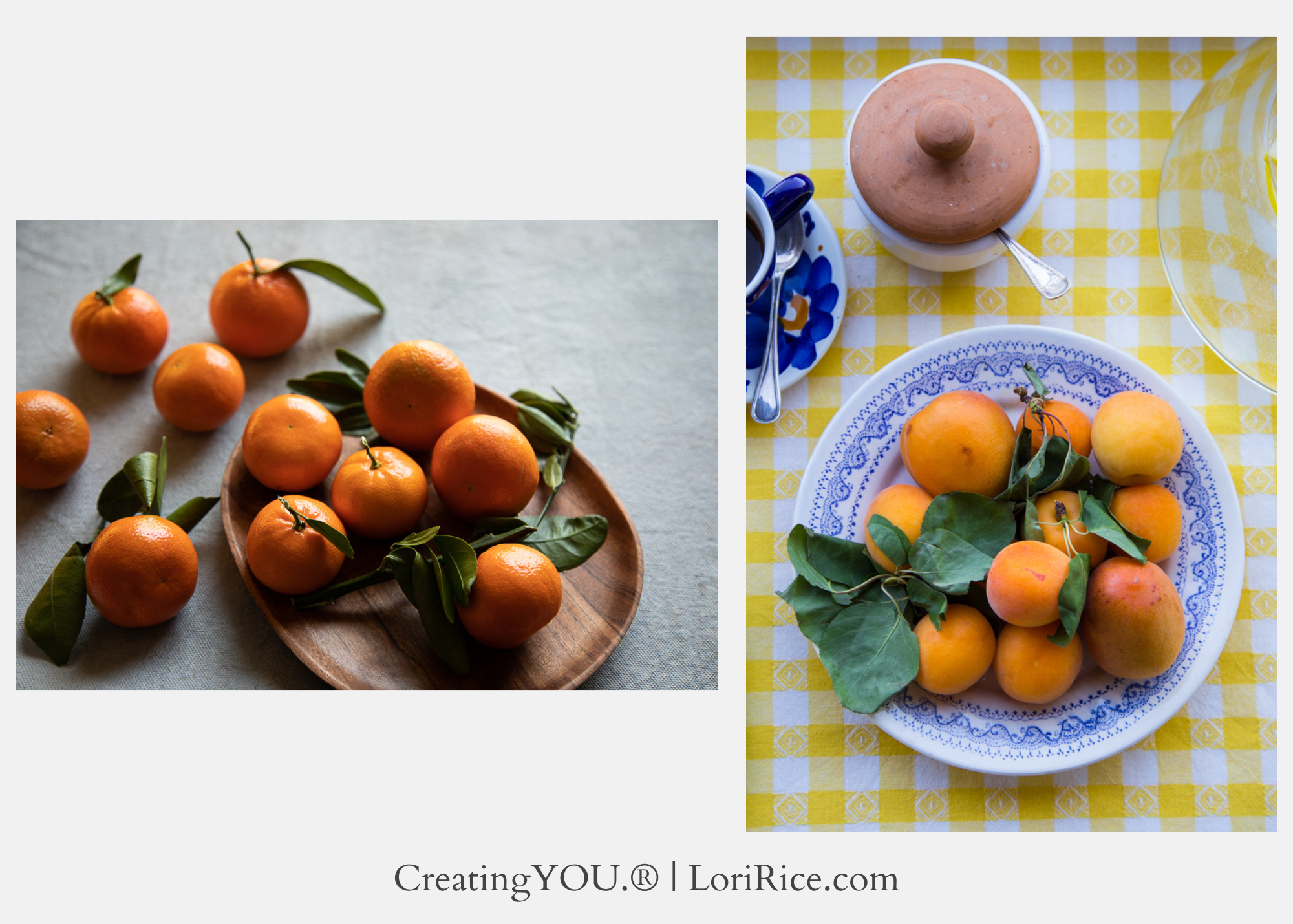
    I’ve traveled to 26 countries and lived in Brazil for a while, but I’ll never forget the time I traveled to Italy specifically for a food photography workshop. My style was so stuck on neutrals, and stones, and woods, which I still love. But that isn’t the reality of kitchens in cultures throughout the world. The plaid, and florals and bright colors opened me up to new ways of thinking about my work. 

  • Walking gardens and farms. Whether it’s a neighborhood walk looking at flower gardens or going to a u-pick farm, searching for unique angles, colors to coordinate, and layout designs is something that always benefits my creativity. 

  • Flipping through home design and decor books. Reviewing the moods created with design styles gives me ideas for types of textures, layouts, and colors to use in my my food and product photography. 

  • Observing wildlife. I’m an animal person. I can watch cows grazing, harbor seals lounging, and birds pecking for hours. At it’s simplest, it calms me and helps me to reflect on my work, but more importantly as I’ve started to photograph wildlife I see how I can work the colors and light of nature into my other types of photography as well. 

Two things that hurt my creative practice

  • Browsing Pinterest. I still like this social media platform and I do still encourage beginners to use it as a place to see a lot of different types of photos to understand what they like in a photo style. But in the past I used it to help me generate ideas. Now, I really feel like doing that clouds my own creativity and keeps me from developing my own original ideas, those that come to me through the five things I mentioned above. 

  • Browsing magazines. Photography, especially food photography, is a trendy thing. And magazines focus on what is trending. Don’t follow trends. Because they will change quickly and your work will soon look dated. It’s fun to experiment with trends, but its much more beneficial to focus on developing your own style that can be carried through your work even as your focus, and minor details around that style, change. 

For example, I was much more into dark and moody, deep woods, and all that with my work early on. It spoke to me. Today, I still love mood, but I also like a slightly brighter look. I’m not chasing trends, I’m creating what speaks to me and what I want viewers to feel when they look at my photos. 


Honestly, I stay away from most magazines for the purposes of reviewing photos. It can be a helpful practice when starting out and determining what you are drawn to, but just be sure you are viewing issues from a span of five years or so in order to see photos of all styles. 


Struggle to coming up with new ideas for your photos? Check out the creative guide,

10 Ways to Photograph Banana Bread
tags: Creative break, photography style
categories: Creative work, Photography Style
Sunday 08.14.22
Posted by Lori Rice
 

The Three Parts of Photography

Three Parts of Photography

There are three parts that influence a final photo. A quality final photo. One that you love and that reflects who you are as the photographer and stylist. 

The ratio of importance is: 

30/15/55

Confidence/Gear/You


30% is your confidence level

For many of us, this one takes the longest to develop. It’s easy to think that photography is all about gear or the eye of the photographer, but if you don’t have the confidence that you are creating valuable work you are never going to put that work out there. 

Something starts to happen when we stop looking to others for what they do and constantly comparing our own styles to theirs. When we stop watching the responses they get, the recognition they receive, and the placement of their work.

You free up a large chunk of space that allows you to focus on your own work, what you like to produce, and your individual style. The more you do this, the more confidence grows, the more work you produce that reflects your individual style, and the better skilled you become. It’s a repeating pattern that fuels your work and your confidence level. Focus, confidence, desire to create, increased skills, and repeat. 

Confidence changes things. 

Confidence in photography


15% is the gear you use

You know I use minimal gear, but I don’t want that to be confused with implying that it’s not important. It is important that your gear matches what you are trying to create.

Want to take pretty flatlays that you only post on Instagram? Your phone will be just fine. Want to photograph splashes and motion? You’ll need to understand shutter speeds and have the lens capable of producing what you envision. I have to have my 100-400mm lens to photograph wildlife from far away. My 50mm f/1.4 allows me to photograph at a shallow depth of field. I love creating food photos with my 24-105mm lens. 

Lenses help you great different photos.

Once you use the gear necessary for the type of photography you are creating, its role stops there. The gear doesn’t control how you style and compose a shot, the angle you saw that no one else does, the way to plate something that is super creative, the color scheme used, the moment you captured that facial expression or snapped at just the right time that animal came into view.


55% is YOU. 

That brings us to the largest component of the photo, you. The photographer who is possibly the stylist, too. 

Trust me, when I got my first professional lens and I saw what I could create with depth of field, I rolled my eyes when I’d hear - it’s not the camera, it’s the photographer behind it. Because at that point in my career, it was most definitely the camera working the magic. 

But as my work and skill level has grown, I now know that what makes my photos mine, are what I bring to them. The scene I see, how I position myself, how I see the colors working together, how I arrange the vegetables, how I choose to create negative space or fill the frame, how long I can wait out the elk to capture him eating grass, the sunrise on the specific day I took the photo, the surfaces and props I’ve searched for at vintage shops, the things I’ve found to use in photos during my travels. 

LoriRicePhotography

You get it right? Hopefully, I’m being clear. It’s you. Who you are, where you are from, what you have access to, what you’ve been through, and where you are going. 

There are other things involved, but this is the most important part of your photo.

 
Confused to Confident: Food and Product Photography for Makers, Growers, and Artisan Creators opens again this fall! Hop on the waitlist to learn more!
tags: photography tips, photography
categories: Photography Style, Photography Tips
Thursday 08.04.22
Posted by Lori Rice
 

Learning outside your photography niche

Food and drink photography ©Lori Rice

Rather listen than read?
Just click play above.

Sometimes we put blinders on. We focus on exactly what we want to do, learn exactly how to do it, and nothing is going to distract us. 

While there are so many situations in life where this is advantageous when it comes to photography and styling it can cause us to miss out on loads of helpful information. 

I’ve been an advocate for learning outside of your niche since I began styling and photographing food over 11 years ago.

I call it the Apply It Back method. It’s when you learn about something else and then you apply what you learned back to your own photography and photography niche. It’s a way to grow your skill and more importantly evolve your individual style. 

Food and drink photography ©Lori Rice

Here’s how it works for me:

  • Landscape photography helps me see my horizon on food sets and keep the scene aligned.

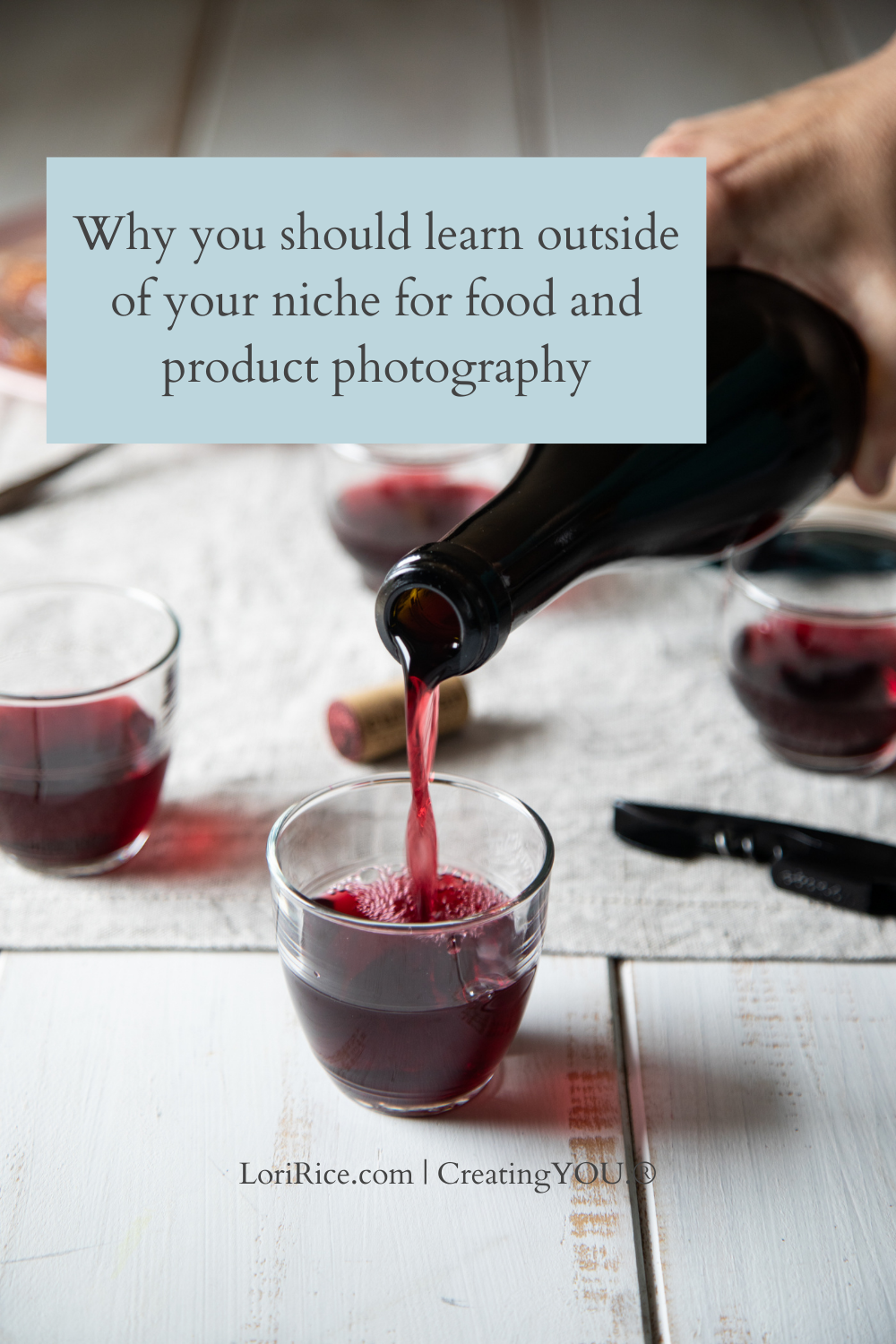
  • Learning about freezing motion in sports and nature photography helps me with food and drink action like pours and sprinkles. 

  • Reading interior design books gives me ideas for color coordination and scenes. 

  • Studying color psychology helps me with propping. 

  • Floral design helps with color coordination and styling table scenes.

  • People and portrait photography helps me with photographing my own hands in shots.

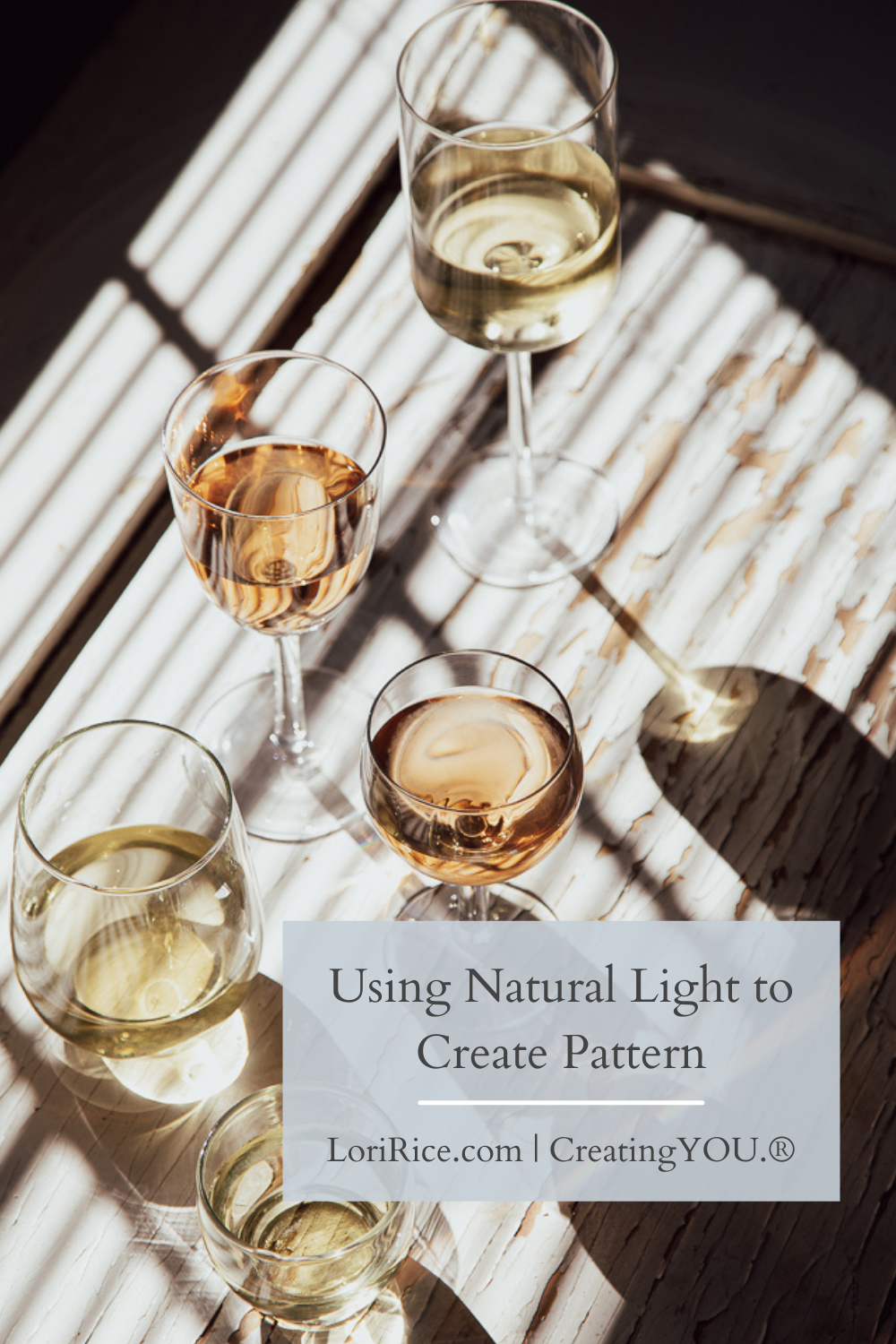
  • Learning about natural light patterns and how to control them helps to improve even my phone photos and videos.

  • Travel gives me ideas for how to reflect real life in my photos.

There are so many things to absorb outside of simply how to do food photography. All of our experiences and studies regardless of the focus and topic can be applied back to our art. 

Learning about other things isn’t time wasted. In fact, it can serve as an enjoyable creative break when you are feeling stuck or burned out. 


5 Steps to Better Food and Product Photography
tags: photography tips
categories: Photography Tips, Creative work, Photography Style
Monday 06.20.22
Posted by Lori Rice
 

Why Transition to CreatingYOU.® Quick Courses?

Honestly, I’ve always been a teacher. It’s something that I’ve been reminded of again in recent months. 

It began with teaching group exercise in college and then evolved into more one-on-one encounters with personal training. I moved on to a career in academia developing curriculum to help people move more and eat well. That was followed by using the train-the-trainer model across the state of Kentucky to teach others how to teach others the curricula I’d developed. 

I think in explaining that you’ll see that there is no surprise things have come full circle for me. To a point where what I enjoy most is finding creative ways to teach others how to build skills and confidence in creating their own photos. 

When it came to teaching food and product styling and photography, the way I got into it was all wrong, though.

I jumped into the online teaching world powered by the ideas that I needed a big course that covered everything I could offer with a higher price tag to match. 

And I created that course - Confused to Confident (CtoC). And many of you have taken it. And many of you have let me know how much it helped you - with creating your photography style, understanding natural light, using your camera in manual mode, developing a step-by-step process from stove to set... 

Each time I re-watch it, I’m not going to lie, I’m a little impressed with myself that I put in all the work to create it. I’m extremely proud of it. It is a really great course. 

But having one big course misses the mark in many ways. 

  • We all have different goals and one big course may not be focused enough to move you forward in the very specific area that you have your sights set on. 

  • So much content at once can be way too much to take in. Yes, you get lifetime access, but life offers many distractions and there are many people who have not fully completed the course. This honestly makes me sad. I want you to finish the course and move forward.

  • It is out of budget for some. CtoC really is moderately priced when it comes to courses of its size (it’s only $297), but I realize that this can be a lot to pay when you aren’t quite sure if each piece of it is what you need to learn. 

  • Having that course is in some ways holding me back from diving deeper into some subjects and types of photography that I’d really like to teach about. 

So while CtoC will still exist, my focus over the coming months will go to CreatingYOU.® Quick Courses which has really been an idea on the back burner since the day I launched my single course.

I’ve just felt like I wasn’t allowed to create a suite of courses because of the distracting noise of others telling me - that’s not how you do it.

But my goal is to be approachable, accessible, and to teach things or a way of doing and looking at them that you likely haven’t experienced yet. CreatingYOU.® Quick Courses will allow me to do this. 

These workshop-style will be designed to finish in a day or less. Some may be a 60-minute workshops, while others may have a few modules and projects for you to complete as you work your way through. They will range from $29 to $79 each based on the topic and content within. 

Have some thoughts or needs? Reach out to me and let me know. I have an ongoing list of topics to teach about and I’d love to know what you would like to learn. 

The first to launch this summer will be Surface School. You’ll learn to break out of boredom with your photography surfaces in a way that will allow you to create photos that are specific to your style and brand.
More soon!


And free content certainly won’t be going away. Be sure to check out my 15-minute video training:

Original Food Photography Surfaces for Small Spaces.

I also send loads of helpful tips through words, slides, and videos about 3 times a month to my subscribers. Sign up here:

CreatingYOU.® Weekly Emails
tags: photography tips, Courses, Updates
categories: Photography Style, Creative work, Photography Tips
Monday 05.02.22
Posted by Lori Rice
 
Newer / Older

Our Privacy Policy and Terms of Sale. ©2025 Fake Food Free Productions, LLC.